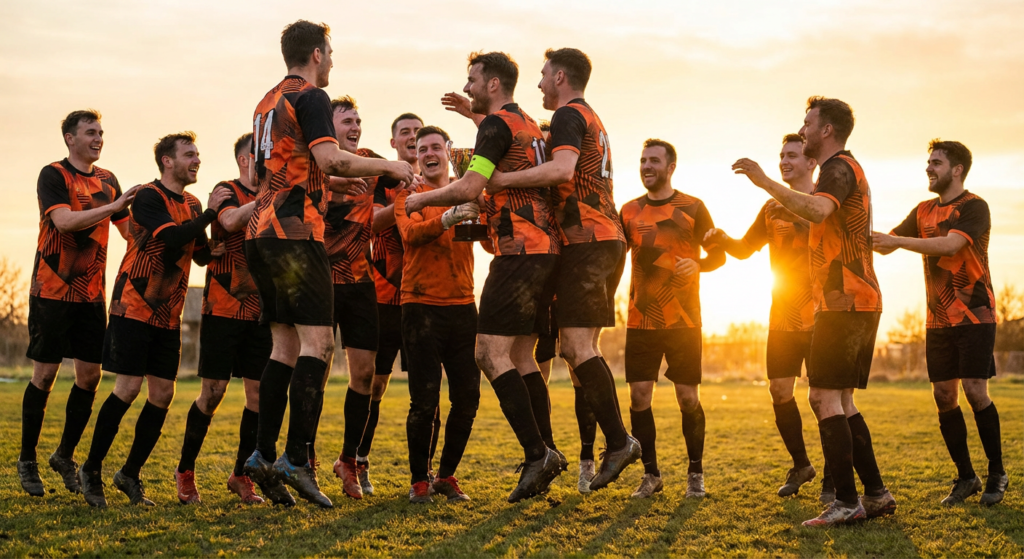
There is a specific kind of magic that happens when a team steps onto the pitch wearing a kit they are truly proud of. It’s not just about the fabric; it’s about identity. Whether you are managing a competitive Sunday league squad, a corporate team, or a youth academy, the jersey is your team’s second skin.
But let’s be honest: the process to custom design football jerseys can be overwhelming.
You have to navigate through confusing fabric terms (what exactly is GSM?), chase twenty different players for their sizes, and worry about whether the printed colors will actually match your club’s crest. A single mistake—like sending a low-quality logo file—can turn your dream kit into a disaster.
You are not alone. We have helped thousands of team managers navigate this process, and today, we are sharing that expertise with you.
Note for our US readers: While the world calls it football, we know you call it soccer. Don’t worry—the design principles, fabrics, and manufacturing processes for custom soccer jerseys are exactly the same. This guide applies to you 100%.
In this complete guide, we will walk you through every step of the journey:
- Design: How to choose colors and patterns that intimidate opponents.
- Tech: Why you must use vector logos (and how to get them).
- Production: The truth about Sublimation vs. Embroidery.
- Logistics: How to handle sizing without a headache.
Phase 1: Preparation – Defining Your Look and Budget
Before you open any design software or contact a manufacturer, you need a game plan. Customizing a kit without a clear direction is the fastest way to end up with a design that looks messy and costs too much.
1. Find Your Team’s Identity
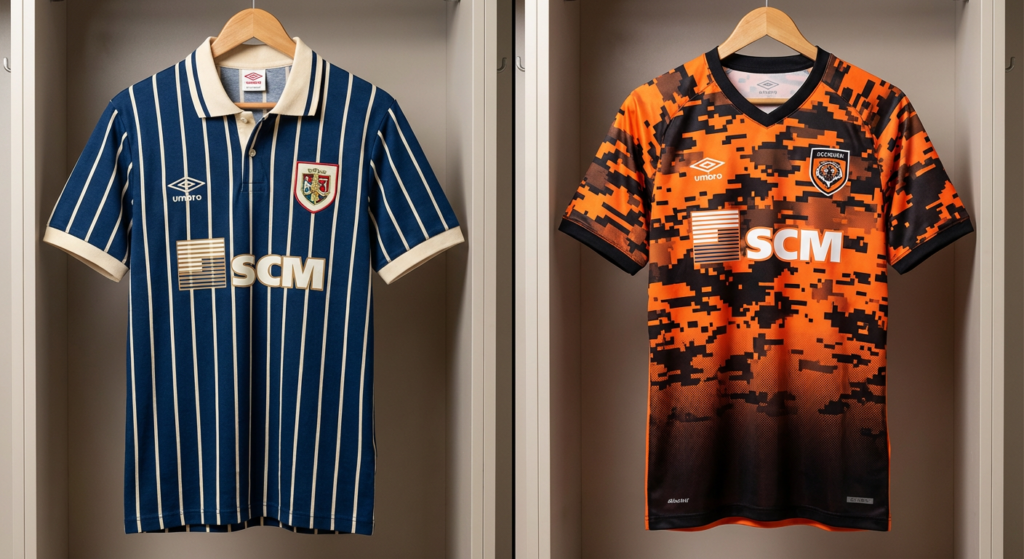
What is the “vibe” of your team? The best football kit design ideas usually fall into one of two categories:
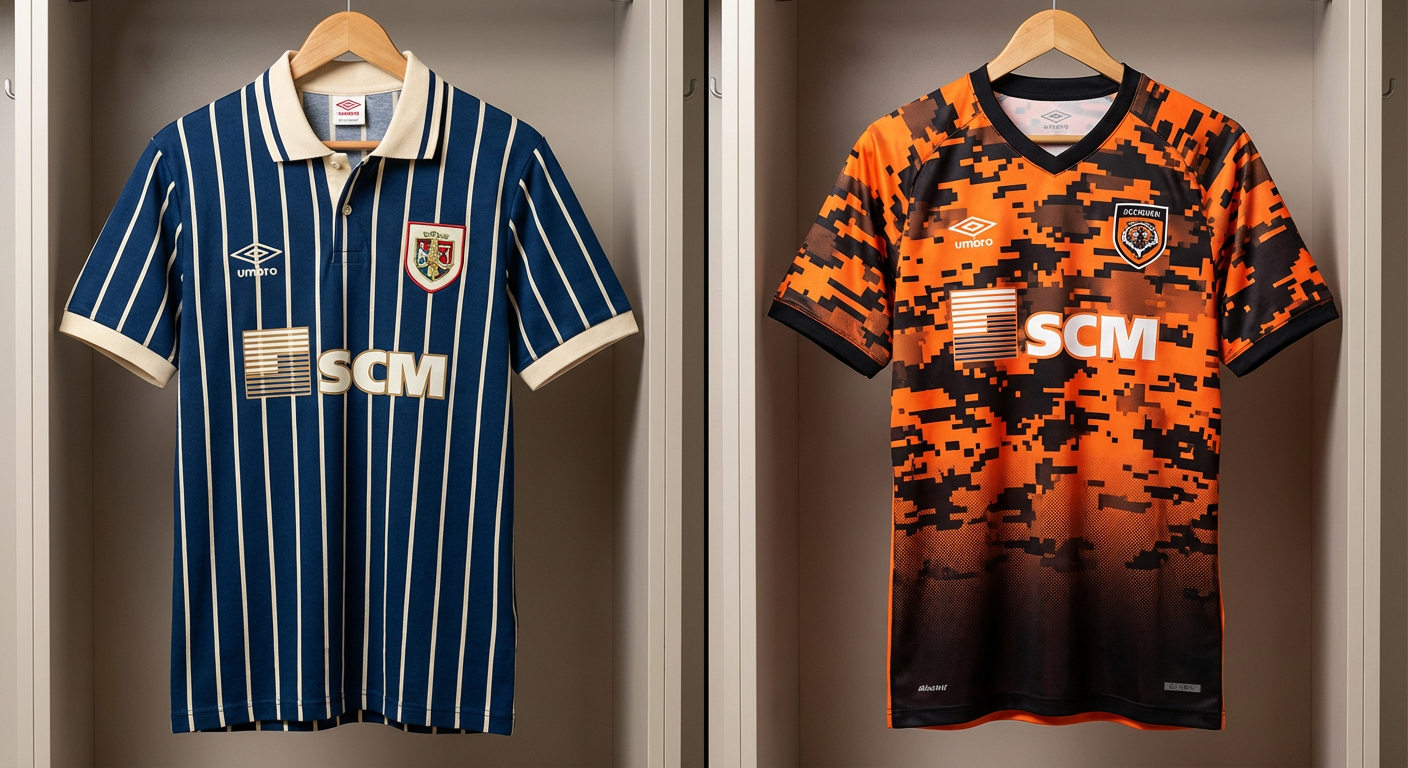
- The Classic Retro Look: Think collars, clean pinstripes, and simple color blocks. This style says, “We are established, professional, and here to do a job.” It’s timeless and often looks better on players of all different body shapes.
- The Modern Bold Look: Think geometric patterns, gradients (fading colors), and digital camo. This style, popularized by modern streetwear and the “Bloke Core” trend, says, “We are fast, aggressive, and fun.”
Pro Tip: Don’t just copy a famous club (e.g., “We want to look like Arsenal”). Instead, take elements you like—such as the sleeve trim or the collar style—and mix them with your own club colors to create something unique.
2. The Budget Reality Check
This is the conversation nobody likes to have, but every manager must handle: How much are the players willing to pay?
When looking for custom football jerseys, pricing generally depends on two factors: Method and Quantity.
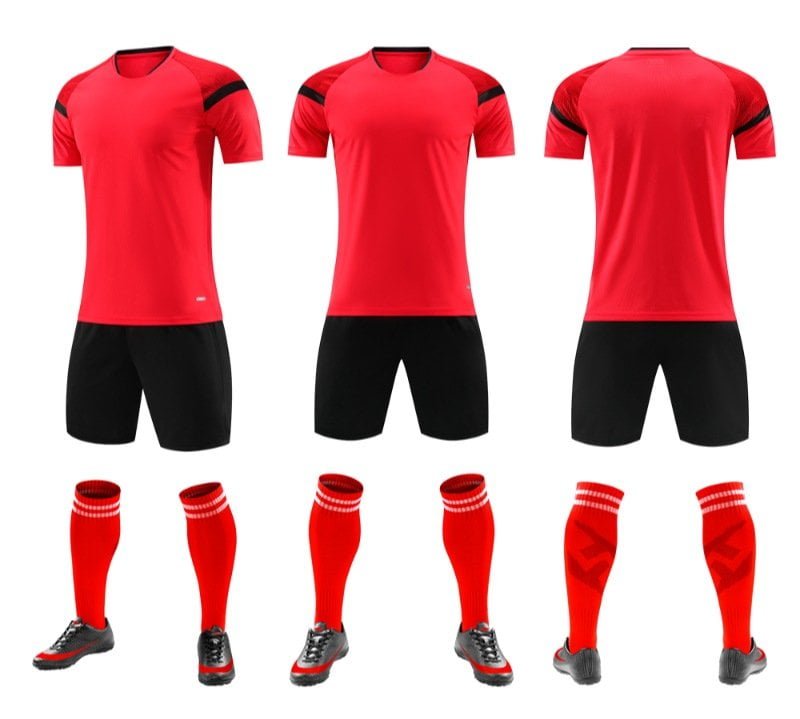
- Stock Templates + Heat Press (Budget-Friendly): You buy a pre-made blank jersey (e.g., a plain red shirt) and press your logo and numbers onto it.
- Pros: Fast and cheap.
- Cons: The design is generic, and the printed numbers may peel off after a season of washing.
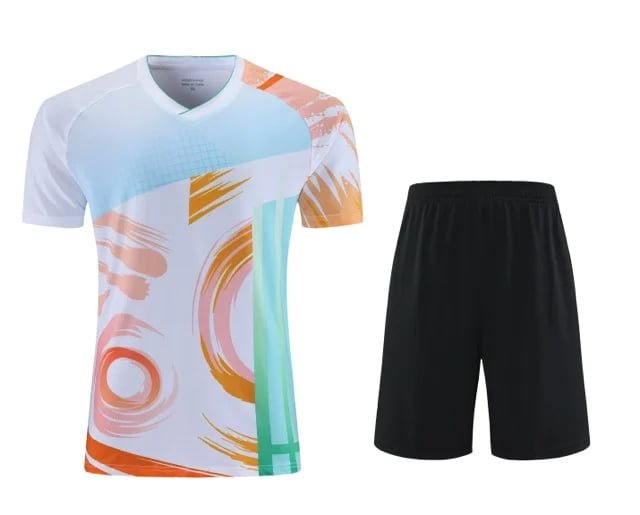
- Full Sublimation (Premium Choice): The entire design—colors, patterns, logos, and numbers—is dyed directly into the fabric.
- Pros: Unlimited design freedom, professional look, and nothing ever peels off.
- Cons: Usually requires a slightly longer lead time (3-4 weeks).
If you are looking for cheap custom football jerseys, the “Stock Template” route is safer. However, if you want a professional kit that lasts for years, Sublimation is the industry standard.
Phase 2: The Design Process – Colors, Logos, and Tools
Now comes the fun part: bringing your vision to life. But be warned—great ideas can turn into messy kits if you ignore a few basic design rules.
1. Choosing Colors and Patterns: The “Rule of Three”
When you design your own football jersey, it’s tempting to use every color in the rainbow. Don’t. The most iconic kits in history usually follow a simple rule: Maximum 3 Colors.
- Primary Color (60-70%): The base color of the shirt (e.g., your club’s main identity).
- Secondary Color (20-30%): Used for sleeves, side panels, or patterns.
- Accent Color (5-10%): Used for trim, logos, and numbers to make them “pop.”
Psychology of Color: Did you know red kits are statistically linked to higher win rates because they signal aggression? Meanwhile, blue conveys calm and tactical discipline, and black (often used for away kits) signals intimidation. Choose a palette that reflects how you want your team to play.
2. The Mistake: Vector vs. Raster Logos (Must Read)
If you only remember one thing from this guide, make it this.
We see this tragedy every day: A team designs a beautiful kit, but sends their club badge as a low-quality JPG they saved from Facebook. The result? A pixelated, blurry mess printed on the chest.
To get a sharp, professional print, you must use a Vector File (formats: .AI, .EPS, .SVG, or .PDF).
- Raster Images (JPG/PNG): Made of pixels (little colored squares). Like a mosaic, if you zoom in, it becomes blocky and blurry.
- Vector Images (AI/EPS): Made of mathematical lines. You can scale them up to the size of a billboard, and they will stay 100% crisp and sharp.
Don’t have a vector file? Don’t worry. Most professional suppliers (including us) can “redraw” your low-quality logo into a vector format for a small fee. Just ask before you order!
3. Best Tools to Visualize Your Design
How do you actually draw the shirt?
- DIY 3D Configurators: There are many “football kit designer” apps online. These are great for playing around with basic ideas.
- Professional Mockups: If you want something truly unique—like a subtle watermark of your city’s skyline or a custom camouflage pattern—automated apps can’t do it.
Our Advice: Use online tools for a rough draft, but let a human designer finalize the production file. We know exactly where the seams sit so your logo doesn’t get cut off at the armpit.
Phase 3: Production – Fabric and Printing Tech
You’ve got a killer design. Now, you need to make sure the physical shirt feels as good as it looks. A design might look great on a computer screen, but if it’s printed on heavy, scratchy fabric, your players will hate wearing it.
1. The Golden Standard: Sublimation Printing
For modern custom soccer jerseys, there is really only one printing method you should consider: Full Dye Sublimation.
Unlike old-school screen printing (where ink sits on top of the fabric like a sticker) or embroidery (which is heavy and can rub against the skin), sublimation turns the ink into a gas that bonds into the fabric fibers.
- Breathability: Because the ink doesn’t block the fabric’s pores, sweat can still escape.
- Durability: You can wash the jersey 500 times, and the design will never crack, peel, or fade.
- Design Freedom: You can print edge-to-edge graphics, gradients, and unlimited colors without paying extra for each new color.
If you are looking for sublimation football jersey design, you are making the right choice for performance.
2. Fabric Matters: Understanding GSM
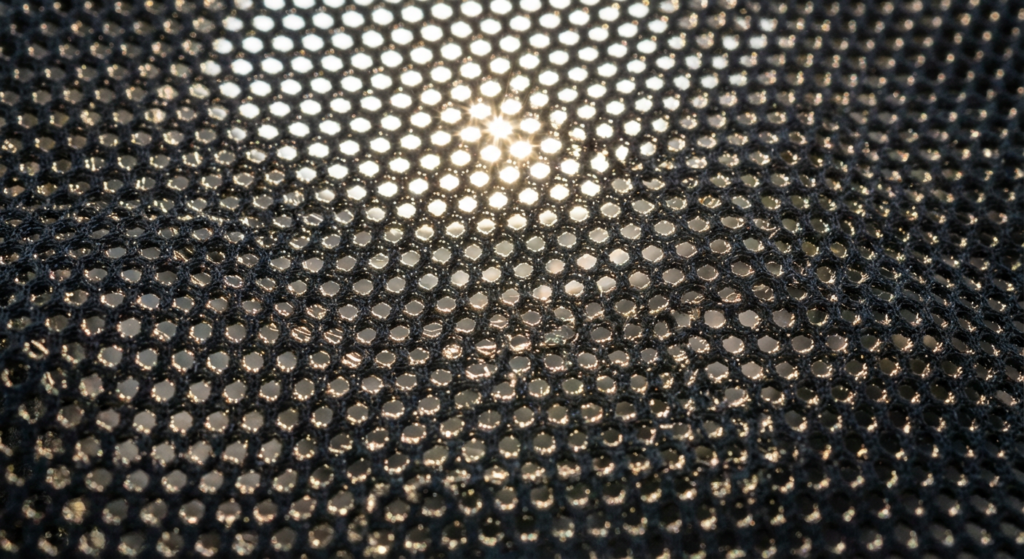
Have you ever worn a shirt that felt like a plastic bag? That’s bad fabric. When comparing samples, ask your supplier about the GSM (Grams per Square Meter).
- 130-140 GSM: Very lightweight. Great for extremely hot climates, but can be a bit sheer (see-through) and less durable for contact sports.
- 150-160 GSM (The Sweet Spot): This is the professional standard. It’s light enough to be breathable but thick enough to withstand pulling and grabbing during a match.
- 180+ GSM: Heavyweight. Usually used for retro-style shirts or fashion wear, but often too warm for high-intensity matches.
Performance Tech: Ensure the fabric is 100% Polyester with Moisture-Wicking technology (often called Dri-Fit or CoolMax). This structure pulls sweat away from the body to the outer layer of the shirt, where it evaporates quickly.
Phase 4: Ordering – Sizing and Logistics
The design is done. The fabric is chosen. Now comes the most stressful part for any manager: The Spreadsheet. Getting 20 players to send you their sizes on time—and ensuring they actually fit—can be a nightmare.
1. Sizing Guide: Avoid the “Too Tight” Nightmare
Here is the uncomfortable truth: A “Large” in the US is very different from a “Large” in Asia or Europe. If you order based on habit, half your team might end up wearing shirts that look like crop tops.
The Solution: The “Half-Chest” Measurement. Don’t ask players for their “size.” Ask them to take their favorite jersey, lay it flat on a table, and measure the width across the chest (from armpit to armpit). Compare this number (in cm or inches) to the manufacturer’s size chart. This method reduces fitting errors by 90%.
2. Cost Breakdown and Turnaround Time
“How much will this cost?” and “When will I get it?”
- The “No Minimum” Advantage: Traditionally, factories required you to buy 50+ shirts. Today, looking for custom football jerseys no minimum order is easier. Whether you need 1 shirt for a gift or 100 for a league, digital sublimation makes it possible. However, expect to pay a premium for single units.
- Turnaround Time: Quality takes time. A rush job (1 week) often leads to mistakes. A standard timeline for custom kits is 3 to 4 weeks (1 week for design/approval + 2 weeks for production + shipping). Plan ahead!
Conclusion: More Than Just a Shirt
We said at the start that a jersey is a team’s second skin. It’s true. When your squad walks onto the pitch in a kit that looks professional, features your badge clearly, and fits perfectly, you start the game 1-0 up psychologically.
You don’t need to be a graphic designer to create something amazing. You just need a vision and the right partner.
Ready to bring your vision to life? Stop guessing and start creating. Contact Us Today to send us your logo or sketch. We will reply within 24 hours with a Free Professional Mockup and a quote tailored to your budget.
Frequently Asked Questions (FAQ)
Q: How much does it cost to custom design a football jersey?
A: Prices typically range from $25 to $50 per kit, depending heavily on the quantity and fabric choice. Bulk orders (20+ sets) usually receive significant discounts.
Q: Can I print copyrighted logos (like Nike/Adidas) on my custom kit?
A: No. Reputable manufacturers cannot print protected trademarks unless you are an authorized team. However, we can create custom branding or use unbranded “white label” kits that look just as professional.
Q: What is the difference between player fit and fan fit?
A: Player fit (or Authentic fit) is tighter and more athletic, designed for performance. Fan fit (or Replica fit) is looser and more comfortable for casual wear.