Let’s be honest: Managing a football team is a bit like herding cats.
Between chasing players for match fees, organizing transport for away games, and dealing with last-minute dropouts, you already have a full-time job on your hands. Designing custom football kits for your squad shouldn’t add to that stress. In fact, it should be the most exciting part of the season.
There is nothing quite like the feeling of unboxing a fresh set of jerseys, seeing your team badge proudly displayed on the chest, and watching your squad step onto the pitch looking like a unified force. As the old saying goes: “Look good, play good.”
However, if you’ve ever tried to order team uniforms before, you know the pitfalls: confusing design tools, sizes that don’t fit, hidden costs, and delivery delays that leave you wearing old bibs for the first match of the season.
We’re here to fix that.
Whether you are running a local Sunday league club, a school team, or a corporate 5-a-side squad, this guide is your playbook. We will walk you through exactly how to design your own football jersey—from choosing the right fabric technology to mastering the dreaded roster collection—so you can get pro-level results without the headache.
Ready to upgrade your team’s look? Let’s kick off.
Phase 1: Know Your Needs Before You Design
Before you start playing with colors and logos, you need a game plan. A custom kit isn’t an off-the-shelf purchase; it’s a manufacturing project. Getting the logistics right early on will save you money and ensure your team actually has shirts to wear for Game 1.
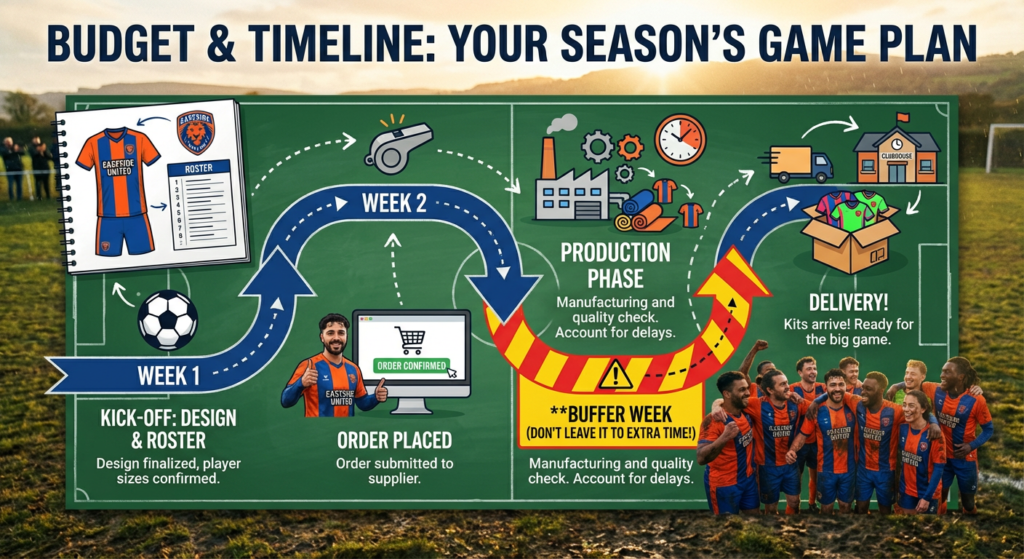
Step 1: Budget and Timeline (Don’t Leave It to Extra Time)
The biggest mistake team managers make? Waiting too long.
Unlike buying a replica shirt from a store, custom football kits take time to manufacture, print, and ship.
- Turnaround Time: Standard production usually takes 3–5 weeks, depending on the complexity of your design and the time of year (pre-season is always busiest). Always build in a buffer week for shipping.
- The Rush Order Trap: Leaving it until the last minute often means paying hefty “rush fees” or settling for limited design options.
Pro Tip: Leverage Bulk Discounts Most manufacturers offer tiered pricing. Ordering 15 kits is almost always cheaper per unit than ordering 5. If you think you might recruit more players mid-season, it’s smarter to order a few spare jerseys (blanks or with generic numbers) in your initial batch to lock in the bulk order discount.
Step 2: Fabric Technology and Fit (Performance Matters)
You want your team to look like pros, but you also need them to be comfortable. A cheap, heavy polyester shirt might look okay in a photo, but it feels like wearing a plastic bag after 90 minutes of running.
When selecting your base, look for these key features:
- Moisture-Wicking Technology: This is non-negotiable. You need fabric that pulls sweat away from the skin to the outer layer of the shirt where it can evaporate. This keeps players cool and prevents the shirt from becoming heavy with sweat.
- Durability: Sunday league football is physical. Your kits need to withstand pulling, sliding, and hundreds of wash cycles. Look for “interlock” weaves which are generally more resistant to tearing than standard mesh.
The “Fit” Debate: Slim vs. Regular Be realistic about your squad. While pro players wear ultra-tight “Slim Fit” or “Player Issue” jerseys, these can be unforgiving for the average amateur player.
- Recommendation: Unless you manage a highly competitive semi-pro team, stick to a Standard/Regular Fit. It’s inclusive for all body types and reduces the number of returns due to sizing issues.
Phase 2: The Fun Part – Designing Your Kit
Now that the logistics are sorted, it’s time to get creative. This is where you bring your team’s identity to life. You don’t need a degree in graphic design; you just need to follow a few golden rules.
Step 3: Colors and Visibility (The 3-Color Rule)
It’s tempting to go wild with neon gradients and complex patterns, but the best football kit designs are usually clean and distinct.
- The 3-Color Rule: Try to stick to a maximum of three main colors:
- Primary: The main body color (approx 70-80% of the shirt).
- Secondary: Sleeves, collar, or side panels (15-20%).
- Accent: Thin trims or pinstripes (5-10%).
- Contrast is King: Remember, the referee needs to see your numbers from 50 yards away in the rain.
- Dark Kit: Use white or bright yellow for numbers/names.
- Light Kit: Use black or dark navy for numbers/names.
- Avoid Red on Green: It’s a nightmare for colorblind players and officials.
Step 4: Sublimation vs. Screen Printing (The Quality Truth)
This is the most technical part of this guide, but also the most important for your wallet. When choosing a custom football jersey maker, you will typically face two choices: Vinyl/Screen Print or Sublimation.
Here is the honest truth about the difference:
Option A: Vinyl / Screen Print (Old School) This involves sticking a layer of plastic-like material on top of the fabric.
- Pros: Can be cheaper for very small, simple orders.
- Cons: The “sticker” blocks the fabric’s breathability (sweat patch alert!). Over time, after repeated washing and tumble drying, numbers will inevitably crack and peel off.
Option B: Sublimation Printing (The Pro Standard) This process uses heat to turn ink into gas, infusing it directly into the fabric fibers.
- The Big Win: Because the design is dyed into the cloth, it will never crack, fade, or peel. The shirt remains 100% breathable across the entire surface.
- Unlimited Design: With sublimation football jerseys, you can add as many sponsors, logos, names, and complex patterns as you want without paying extra for each “print location.” The cost is usually flat-rate.
Our Verdict: For a full team kit that needs to last more than one season, Sublimation is always the better investment.
Step 5: Identity and Sponsors (No Blurry Logos Allowed)
A great kit can be ruined by a pixelated, blurry crest. If you are securing a local business as a sponsor (great way to fund the kit, by the way!), you need to ensure their brand looks professional.
- The Golden Rule of File Formats: When uploading logos to a football kit designer, always try to use Vector Files (formats usually ending in .AI, .EPS, .SVG, or .PDF).
- Why? Unlike a standard image (JPG or PNG) which gets blocky and blurry when you zoom in, vector files are made of math. They can be stretched to the size of a stadium and still remain perfectly sharp.
- Don’t have a vector? If you only have a low-quality JPG, ask your supplier if they offer a “logo redrawing service.” Many will fix it for a small fee.
- A Note on Copyright: We know you love your favorite pro team, but you cannot upload the Nike Swoosh, the Adidas Three Stripes, or the Manchester United crest onto a custom jersey. Stick to your own club badge and your legitimate sponsors to avoid your order being rejected for copyright infringement.
Phase 3: The Manager’s Survival Guide
You have a design you love. Now comes the hard part: getting the right size for Dave, who swears he’s a Medium but is definitely a Large, and getting everyone to pay up.
Step 6: Mastering the Roster (Organized Chaos)
Collecting names, numbers, and sizes for a squad of 15+ players via a WhatsApp group chat is a recipe for disaster. Messages get buried, typos happen, and you end up ordering a “Small” for your 6ft 4in center-back.
- Ditch the Chat, Use a Spreadsheet: Centralize everything. Do not accept orders via text. Create a shared Google Sheet or use an Excel template where you can see the full list in one view.
- Check the Sizing Chart… Twice: Sizing varies wildly between brands. A “Large” from a high-street fashion brand is very different from a “Large” in performance sportswear.
- Action: Share the manufacturer’s specific sizing chart with your team. Ask players to measure a shirt they currently own that fits well and compare it to the chart. Do not guess.
Step 7: Samples and Approvals (Try Before You Buy)
If you have the time (at least 6-8 weeks before the season), order a sample. Most custom football jersey makers allow you to order a single unit. Seeing the colors in real life and trying on the fit can save you from a bulk order disaster. If you are in a rush and can’t wait for a custom sample, ask the supplier to send a “blank” sample just to check the sizing and fabric quality.
Phase 4: Completing the Look (Don’t Forget the Details)
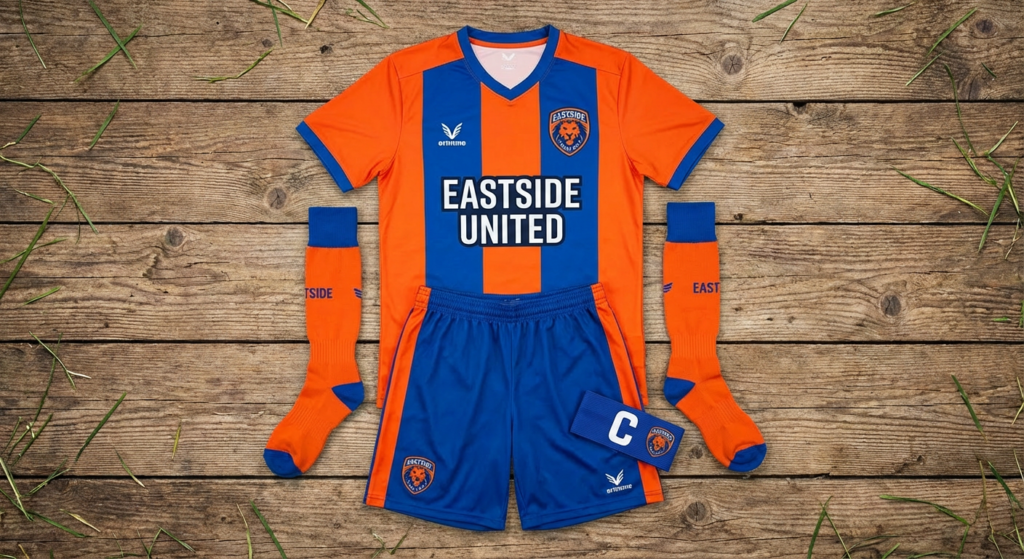
You’ve designed a world-class shirt, but nothing ruins the pro look faster than mismatched socks or training bibs that don’t fit. To truly look like a team, you need to think beyond just the jersey.
- Custom Football Socks: You can often get socks knitted with your club’s name or initials. It’s a small detail that adds a huge amount of class.
- Goalkeeper Kits: Don’t let your keeper wear a random training top. Most custom football kit suppliers allow you to design a matching keeper kit (usually in a contrasting color like neon or pink) as part of the same bulk order.
- Warm-up Gear: Arriving at the pitch in matching tracksuits or warm-up tees sends a psychological message to the opposition before kickoff: “We are organized, and we are here to win.”
Conclusion: Wear Your Colors with Pride
Designing your own football kit is more than just a logistical task; it’s about building an identity. When your players pull on that shirt for the first time, they aren’t just wearing polyester—they are wearing the team’s badge, history, and ambition.
By following this guide—planning your timeline, choosing the durable sublimation printing method, and organizing your roster like a pro—you can ensure that the only thing you have to worry about this season is the result on the pitch.
Ready to bring your vision to life? Stop imagining and start creating. Open our [3D Football Kit Designer] now to build your dream kit, upload your badge, and get a quote in minutes. Your team is waiting.
Frequently Asked Questions (FAQ)
Q: How much does a custom football kit cost?
A: Prices vary based on quantity and fabric choices. Typically, a fully sublimated custom jersey costs between $30–$50 per unit. Remember, ordering in bulk (15+ kits) usually unlocks significant discounts compared to buying single items.
Q: What is the minimum order quantity (MOQ)?
A: This depends on the manufacturer. Some suppliers have strict MOQs of 10 or 15 kits per design. However, many modern custom jersey makers now offer “No Minimum” policies, allowing you to order single replacements for new players later in the season.
Q: Can I use famous brand logos (like Nike or Adidas) on my custom kit?
A: No. Unless you are buying official branded stockwear and printing on top of it, you cannot legally print a trademarked logo (like the Swoosh) on a custom-manufactured shirt. You must own the rights to any logo you upload.
Q: How do I wash my printed football shirt?
A: For sublimated kits, you can wash them normally at 30°C or 40°C. If you have vinyl printed names/numbers, always wash the shirt inside out and avoid tumble drying to prevent the prints from peeling.
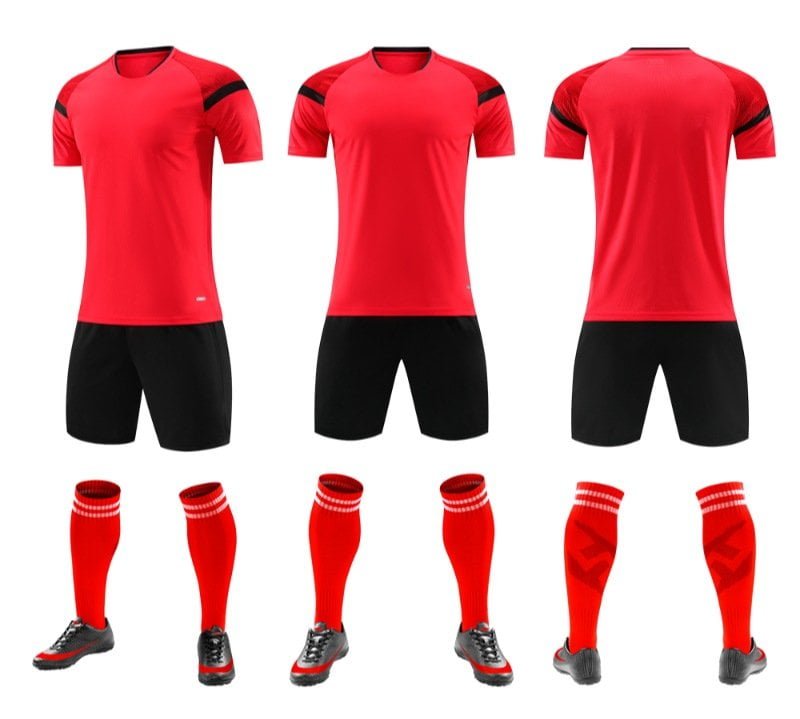
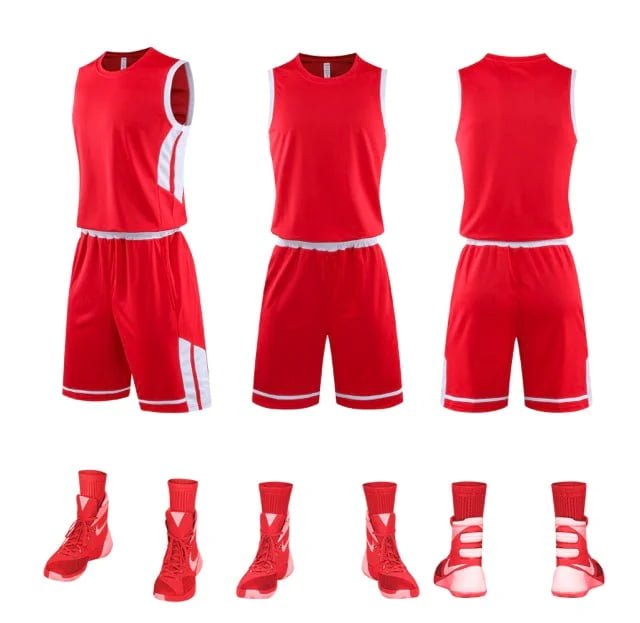
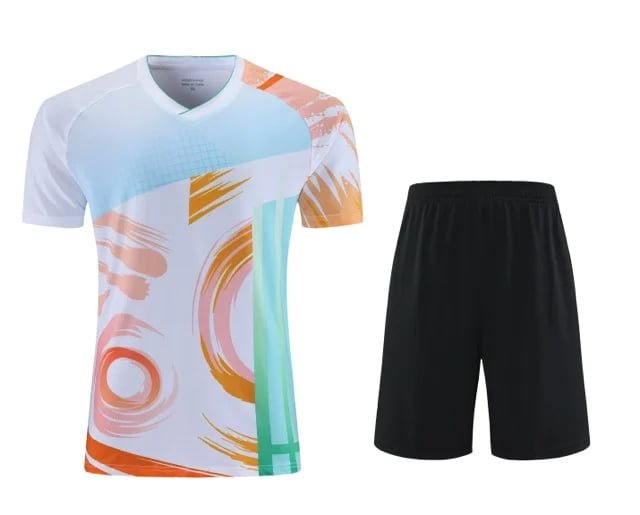
Stand out on the court and the field with elite custom gear from Coolwarekits. Whether you need high-performance Football kits, breathable Basketball jerseys, or lightweight Badminton uniforms, we deliver professional-grade quality tailored to your team’s unique spirit. With Coolwarekits, you get durable fabrics, vibrant custom prints, and a perfect fit that powers your game.
Ready to elevate your team’s look? Contact us today for a custom quote or visit our official website to browse the latest Coolwarekits collections!