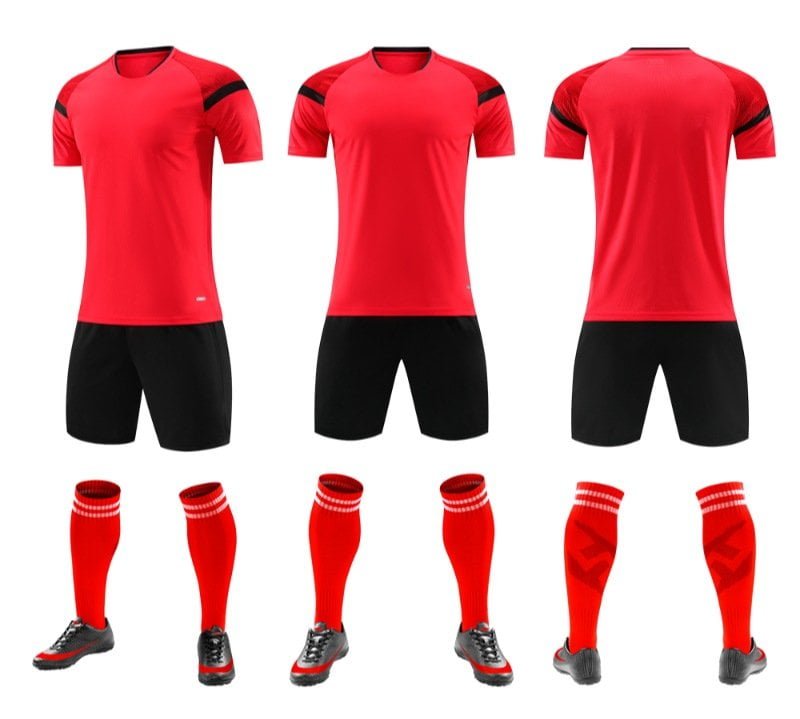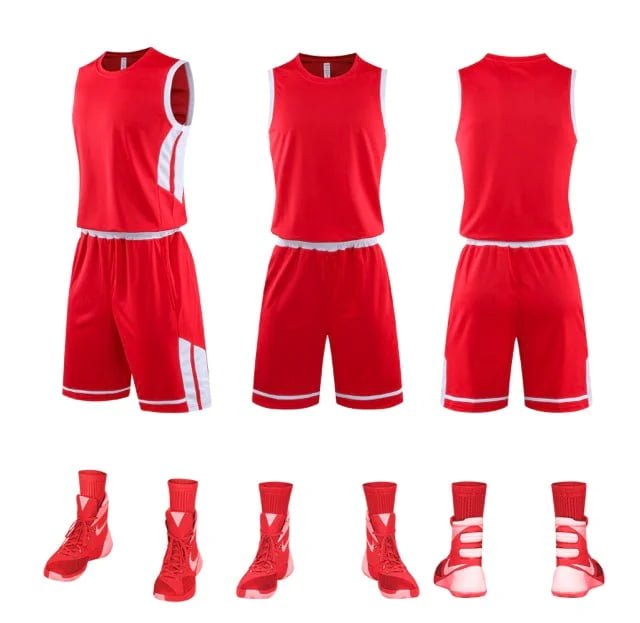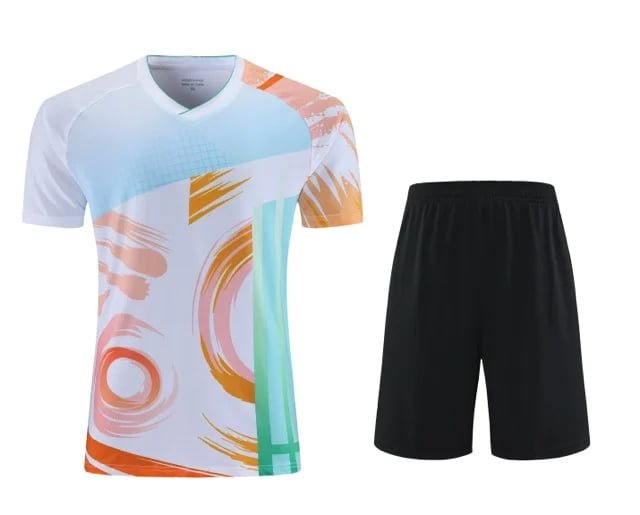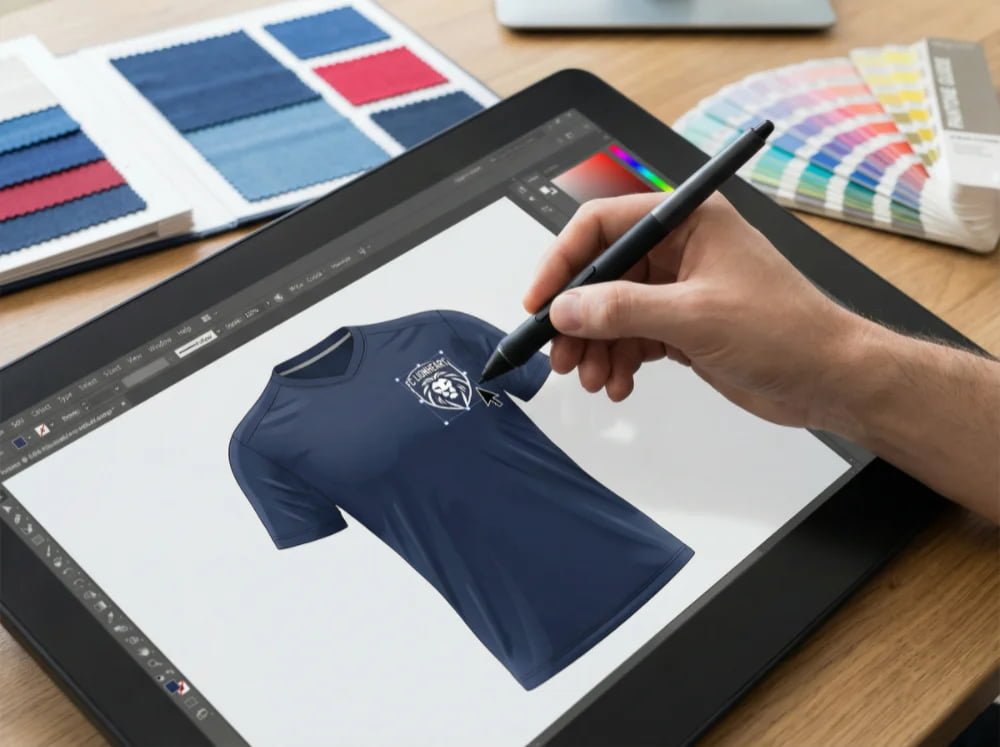
When you order a kit for your team, you aren’t just buying fabric; you’re investing in an identity. Whether it’s for a professional league or local youth soccer uniforms, the journey from a digital concept to a physical jersey is a complex technical feat. Understanding the custom soccer uniforms production process ensures you get the quality your athletes deserve without the common headaches of delays or poor printing.
Table of Contents
- The 9-Step Blueprint for High-Quality Custom Soccer Uniforms
- Why Does “Design Your Own Soccer Uniform” Often Fail Without a Technical Mockup?
- Is Your Fabric Choice Killing Your Team’s Performance on the Pitch?
- How Do Sublimation and DTF Differ in the Longevity of Youth Soccer Uniforms?
- Frequently Asked Questions (FAQ)
The 9-Step Blueprint for High-Quality Custom Soccer Uniforms
To achieve a professional-grade kit, manufacturers follow a rigorous vertical production flow. This isn’t just about sewing; it’s about engineering a garment that handles heat, friction, and moisture while maintaining vibrant colors. According to rigorous ISO textile standards, colorfastness and material strength must be verified to ensure the gear lasts an entire season.
| Phase | Critical Actions | Quality Benchmark |
| Consultation | Requirement discussion & usage profiling | Market compliance & size accuracy |
| Material Science | Fit & Fabric selection (polyester blends) | Breathability & GSM weight check |
| Design Phase | Digital Mockup & Element Definition | Logo placement & font legibility |
| Prototyping | Pre-production physical samples | Color matching & print durability |
| Manufacturing | Cutting, Sublimation, and Sewing | Stitch density & seam strength |
At Coolwarekits, we emphasize that the most critical part of this process is the Requirement Discussion. We analyze whether the gear is for high-stakes matches or casual training, as this dictates the fabric weight and the specific type of high-performance polyester fibers required.
Why Does “Design Your Own Soccer Uniform” Often Fail Without a Technical Mockup?
Have you ever wondered why a design that looks amazing on your computer screen feels “off” once it’s printed on a jersey? This is the gap between graphic design and textile engineering.
When you design your own soccer uniform, you are essentially creating a 2D blueprint for a 3D moving object. Professional manufacturing requires a Step 4: Mockup Creation & Approval phase. This isn’t just a picture; it’s a technical document marking exact distances for club crests, sponsor scales, and player number alignment. Without a digital mockup that accounts for fabric stretch and seam placement, logos often end up distorted.
Technical studies published by the IEEE on wearable technology and garment geometry emphasize that precise sizing and element placement are essential for maintaining an athlete’s full range of motion. This is why our process includes a “Fit Selection” before a single thread is sewn, ensuring your custom jerseys perform as well as they look.
Is Your Fabric Choice Killing Your Team’s Performance on the Pitch?
Is “breathable” just a marketing buzzword, or can the wrong fabric actually slow down your players? According to research on thermal regulation in athletes published by the American College of Sports Medicine (ACSM), excessive heat storage in the body leads to early fatigue and decreased cognitive function.
When selecting soccer uniforms custom options, the Step 2: Fit & Fabric Confirmation is vital. Low-quality materials trap sweat, making the jersey heavy and abrasive. Professional custom soccer uniforms utilize moisture-wicking technology where the capillary action of the knit pulls sweat away from the skin.
For teams looking for specialized fits, exploring our collections for mens custom soccer jerseys or womens custom soccer jerseys ensures the fabric is cut to maximize airflow based on physiological differences.
How Do Sublimation and DTF Differ in the Longevity of Youth Soccer Uniforms?
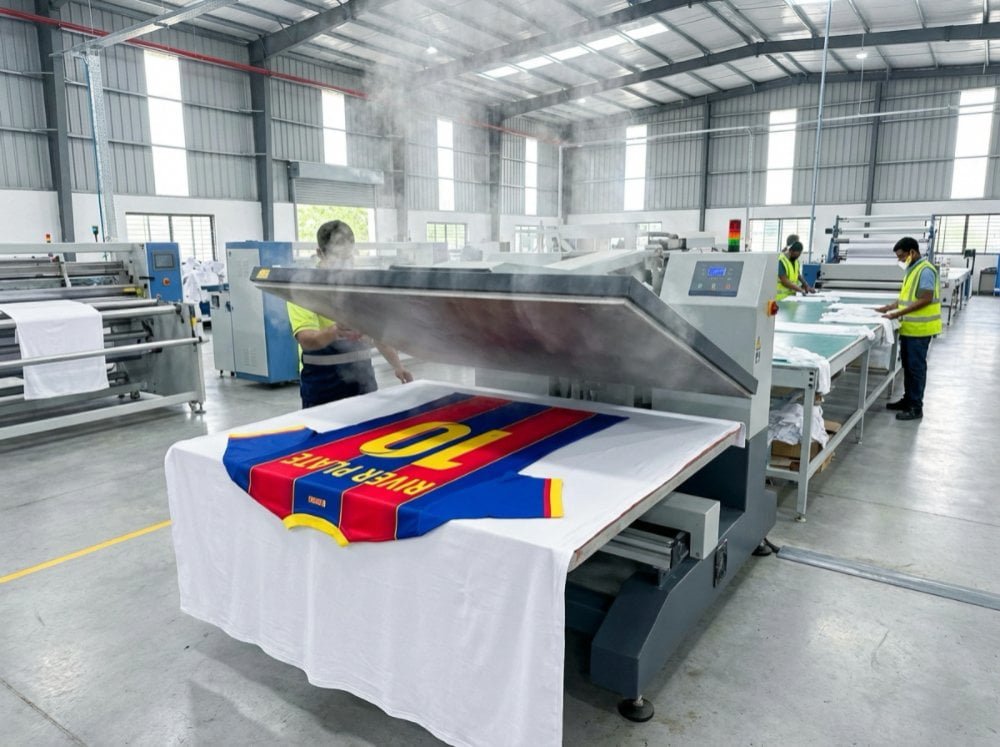
Why do some jerseys look brand new after a season, while others peel after three washes? The answer lies in Step 7: Bulk Production—specifically the printing method.
For youth soccer uniforms, durability is the highest priority.
-
Sublimation: The ink is gassed into the fibers at high temperatures. It never fades, cracks, or peels because the ink becomes part of the fabric.
-
DTF (Direct to Film): Excellent for vibrant, small-batch logos with high detail.
-
Heat Transfer: Best for names and numbers where a slightly raised texture is desired.
Choosing the right soccer uniform design isn’t just about aesthetics; it’s about choosing a print technology that survives the mud, the slides, and the industrial washing machines. You can find more details on how we handle these technical aspects in our FAQ section.
Frequently Asked Questions (FAQ)
What is the standard lead time for a bulk order?
Typically, once the Step 6: Sample Approval is finalized, bulk production takes 15–25 days. Shipping time depends on the logistics arrangement chosen in Step 9.
Can I get a physical sample before the whole team’s order is made?
Yes. Step 5 of our process is dedicated to Pre-Production Sample Making. This allows you to feel the fabric and see the colors in real life before committing to the full run.
Are there different cuts for youth and adults?
Absolutely. We offer specific youths custom soccer jerseys that are scaled for younger athletes, ensuring the proportions of logos and numbers remain aesthetically pleasing.
Conclusion: Get Your Kit Right the First Time
A professional custom football kit is the result of clear communication and technical precision. From the initial Requirement Discussion to the Final Inspection, every step is designed to ensure that when your team steps onto the field, their focus is on the game, not a scratchy label or a peeling logo.
Ready to start your team’s transformation? Contact Coolwarekits today for a free consultation and let our design team bring your vision to life.