When developing custom sportswear, one question comes up again and again:
Should we choose sublimation printing or heat transfer logos?
Many football clubs, academies, sports brands, and distributors are familiar with both terms, but are not always sure which option is better for their project.
The truth is that neither method is universally better.
The right choice depends on your design, budget, quantity, and performance requirements.
Understanding the differences can help you avoid costly mistakes and create a product that matches your customers’ expectations.
What Is Sublimation Printing?
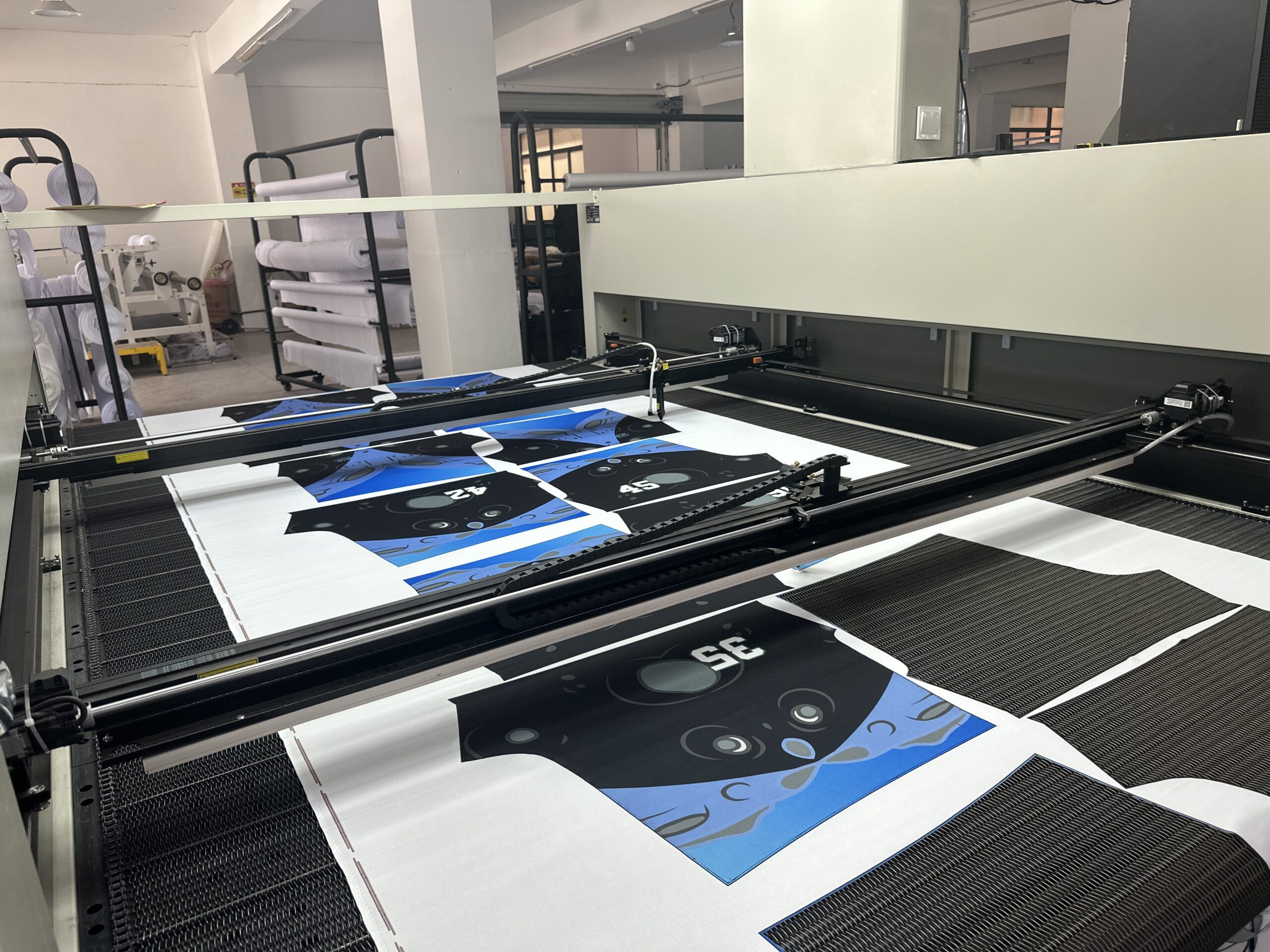
Sublimation is the most commonly used decoration method for custom football kits and teamwear.
The process works by printing the design onto special transfer paper and then using high temperature and pressure to permanently transfer the graphics into the polyester fabric.
Unlike traditional printing methods, sublimation does not sit on top of the fabric.
Instead, the ink becomes part of the fabric itself.
Advantages of Sublimation
- Lightweight feel
- No cracking or peeling
- Unlimited colors
- Full-body designs possible
- Excellent durability
- Ideal for polyester fabrics
Because the design becomes part of the fabric, players usually cannot feel the print when wearing the garment.
This makes sublimation particularly popular for football jerseys, basketball uniforms, volleyball kits, and other performance apparel.
Suggested Image:
A sublimation printing machine transferring a football jersey design onto polyester fabric.
What Is Heat Transfer Printing?
Heat transfer printing works differently.
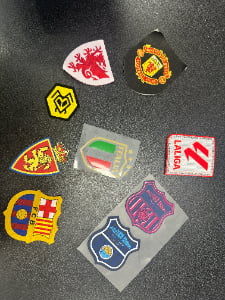
Instead of printing directly into the fabric, logos, numbers, names, or graphics are first produced on a separate material and then applied to the garment using heat and pressure.
There are several types of heat transfer applications, including:
- PU heat transfer
- Vinyl transfer
- Silicone logos
- TPU logos
- Reflective transfers
- DTF transfers
Heat transfer is often used when customers want premium logo effects or small customization areas.
Advantages of Heat Transfer
- Premium logo appearance
- Suitable for small quantities
- Works on various fabrics
- Special effects available
- Excellent logo detail
This method is commonly used for:
- Club badges
- Sponsor logos
- Player names
- Numbers
- Brand logos
Suggested Image:
Heat press machine applying a sponsor logo onto a football jersey.
Durability Comparison
One of the biggest concerns for buyers is durability.
Sublimation
Because the design becomes part of the fabric, sublimation graphics generally:
- Do not crack
- Do not peel
- Do not fade easily
- Last for the life of the garment
Heat Transfer
Modern heat transfer materials are very durable, but they remain attached to the fabric surface.
Over time, poor-quality transfers may experience:
- Peeling
- Cracking
- Edge lifting
However, high-quality TPU, silicone, and PU transfers can still provide excellent durability when properly applied.
For large-area graphics, sublimation usually wins.
For premium logo applications, heat transfer remains a strong option.
Appearance Comparison
Appearance is another major factor.
Sublimation
Best for:
- Full-body graphics
- Complex patterns
- Gradient colors
- Unlimited design freedom
Examples include:
- Football jersey designs
- Training kits
- Esports jerseys
- Basketball uniforms
Heat Transfer
Best for:
- Premium logos
- Raised effects
- 3D branding
- Special textures
Many professional sports brands use heat transfer logos because they provide a more premium appearance than standard printing.
Suggested Image:
Side-by-side comparison of a sublimated jersey and a jersey with TPU heat transfer logos.
Cost Comparison
Cost depends heavily on the project requirements.
Sublimation
Generally more economical when:
- Producing complete jerseys
- Printing large graphics
- Using multiple colors
- Creating custom designs
Heat Transfer
Generally more economical when:
- Decorating existing garments
- Adding small logos
- Producing limited quantities
- Customizing names and numbers
For most custom football kit projects, sublimation offers better overall value.
Which Method Feels Better During Play?
Athletes often care about comfort.
Sublimation
Because the design becomes part of the fabric:
- No additional weight
- No extra thickness
- Maximum breathability
Heat Transfer
High-quality transfers are usually comfortable, but players may still feel:
- Slight thickness
- Raised surfaces
- Additional layers on the garment
For performance-focused sportswear, sublimation generally provides the most natural feel.
Why Many Premium Teamwear Products Use Both Methods
Many people assume they must choose one method or the other.
In reality, some of the best teamwear products combine both.
For example:
- Sublimated jersey body
- TPU club badge
- Silicone sponsor logo
- Heat transfer player numbers
This approach combines:
- The flexibility of sublimation
- The premium appearance of heat transfer
Many professional clubs and sports brands use this hybrid solution.
Suggested Image:
Premium football jersey featuring sublimated graphics with TPU and silicone logos.
Which Option Is Best for Your Project?
The answer depends on your goals.
Choose sublimation if you need:
- Fully customized jerseys
- Maximum durability
- Unlimited colors
- Lightweight performance
- Large production quantities
Choose heat transfer if you need:
- Premium logo effects
- Small customization areas
- Special textures
- Luxury branding details
For many football clubs, academies, and distributors, the best solution is often a combination of both technologies.
Final Thoughts
Sublimation and heat transfer are not competing technologies—they solve different problems.
Sublation dominates modern custom teamwear because of its durability, flexibility, and comfort. Heat transfer remains valuable because it allows brands to create premium logos and visual details that sublimation cannot achieve.
By understanding the strengths of each method, buyers can make smarter decisions and create teamwear that looks professional, performs well, and meets the expectations of players and customers alike.