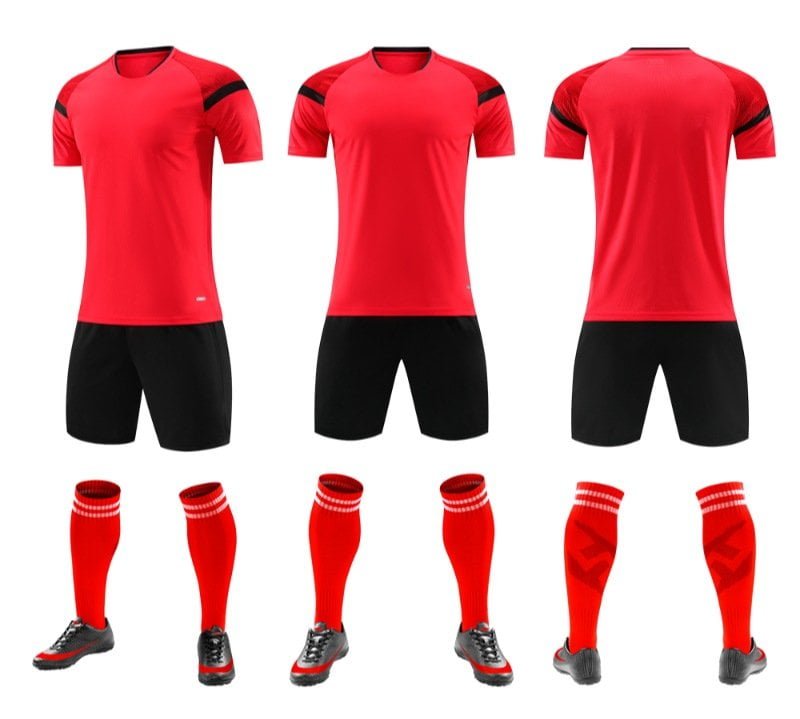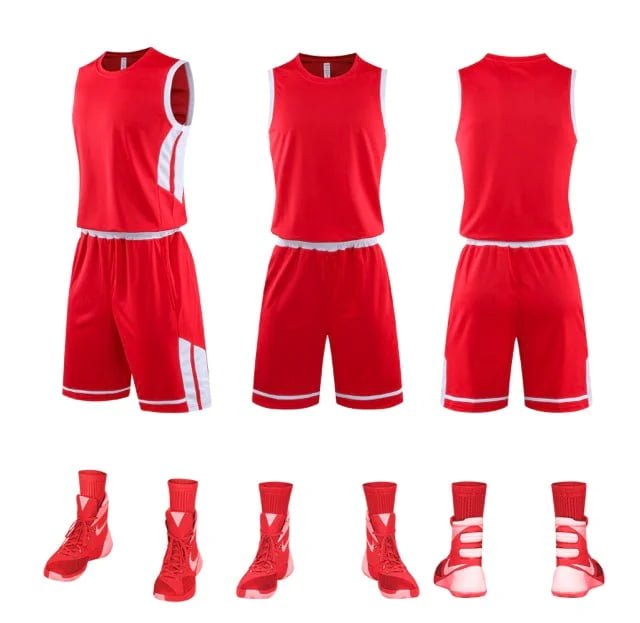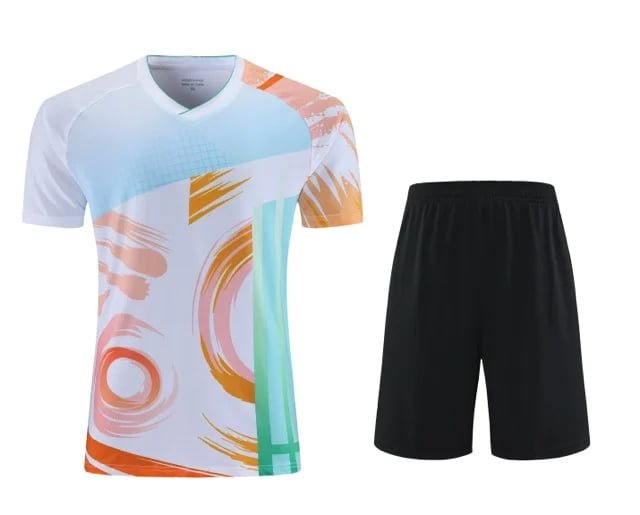
Many football clubs, academies, sports brands, and importers order sublimation-printed soccer kits every season.
They work with these jerseys every day — during training sessions, tournaments, league matches, and retail sales.
But in many cases, buyers only see the final product.
They do not always see what happens behind the scenes before a jersey becomes match-ready.
Sublimation printing has become one of the most widely used production methods in modern teamwear manufacturing because it combines:
- Vibrant colors
- Lightweight performance fabrics
- Long-lasting graphics
- High customization flexibility
In this article, we’ll take a closer look at how sublimation soccer jerseys are actually made.
What Is Sublimation Printing?
Sublimation printing is a process where designs are transferred directly into polyester fabric using heat and pressure.
Unlike traditional surface printing methods, sublimation does not simply place ink on top of the fabric.
Instead, the ink becomes part of the fabric itself.
This creates several important advantages for sportswear:
- Graphics do not easily crack or peel
- Colors remain vibrant over time
- Jerseys stay lightweight and breathable
- Large full-color designs are possible
- Complex patterns and gradients can be printed clearly
Because of these benefits, sublimation has become the standard production method for many custom football kits and training jerseys.
Step 1: Preparing the Jersey Design
Every sublimation project starts with the digital artwork.
The design team prepares:
- Team colors
- Sponsor logos
- Club badges
- Player names
- Numbers
- Patterns and graphic elements
At this stage, careful attention is needed to make sure:
- Colors are correct
- Logos are positioned properly
- Numbering remains readable
- Design elements align with the garment pattern
For larger academy or club orders, this stage is especially important because multiple teams, sizes, and player lists may be involved.
Once the artwork is approved, the production files are prepared for printing.

Step 2: Printing the Design Onto Transfer Paper
The next step is printing the design onto special sublimation transfer paper.
This paper temporarily holds the graphics before they are transferred into the fabric.
At this stage:
- The design is printed in reverse
- Specialized sublimation inks are used
- Color calibration is carefully controlled
The transfer paper acts as the bridge between the digital design and the fabric itself.
Although the printed sheets may not look impressive on their own, they contain all the information needed for the final jersey graphics.
Step 3: Heat Transfer Onto the Fabric
After the transfer paper is prepared, the printing process moves to the heat press stage.
The transfer paper and polyester fabric are placed together under:
- High temperature
- High pressure
- Controlled timing
During this process, the sublimation ink changes into gas and permanently bonds with the polyester fibers.
This is the key reason why sublimated graphics feel different from traditional surface prints.
The design becomes embedded inside the fabric rather than sitting on top of it.
As a result:
- The fabric remains soft
- Breathability is maintained
- The graphics become highly durable
This process is one of the reasons sublimation is so popular in football teamwear production.
Why Polyester Fabric Is Required for Sublimation
Sublimation printing works best on polyester-based fabrics.
This is because polyester fibers can bond effectively with sublimation inks during the heating process.
Most modern soccer jerseys use polyester because it also offers:
- Moisture-wicking performance
- Fast drying
- Lightweight feel
- Durability during training and matches
Different polyester fabrics may still vary in:
- Texture
- Weight
- Stretch
- Breathability
depending on the needs of the club, academy, or brand.
Step 4: Cutting the Printed Fabric
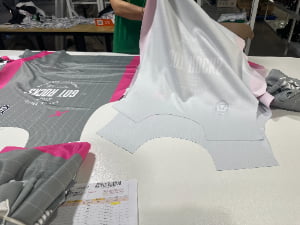
Once the fabric printing is completed, the material moves to the cutting stage.
At this point:
- Front panels
- Back panels
- Sleeves
- Collars
- Shorts panels
are cut according to the approved sizing patterns.
Accurate cutting is extremely important because even small deviations can affect:
- Sizing consistency
- Logo alignment
- Final garment fit
For larger teamwear orders, cutting management becomes even more critical because many different sizes may be produced simultaneously.
Step 5: Sewing the Jersey Together
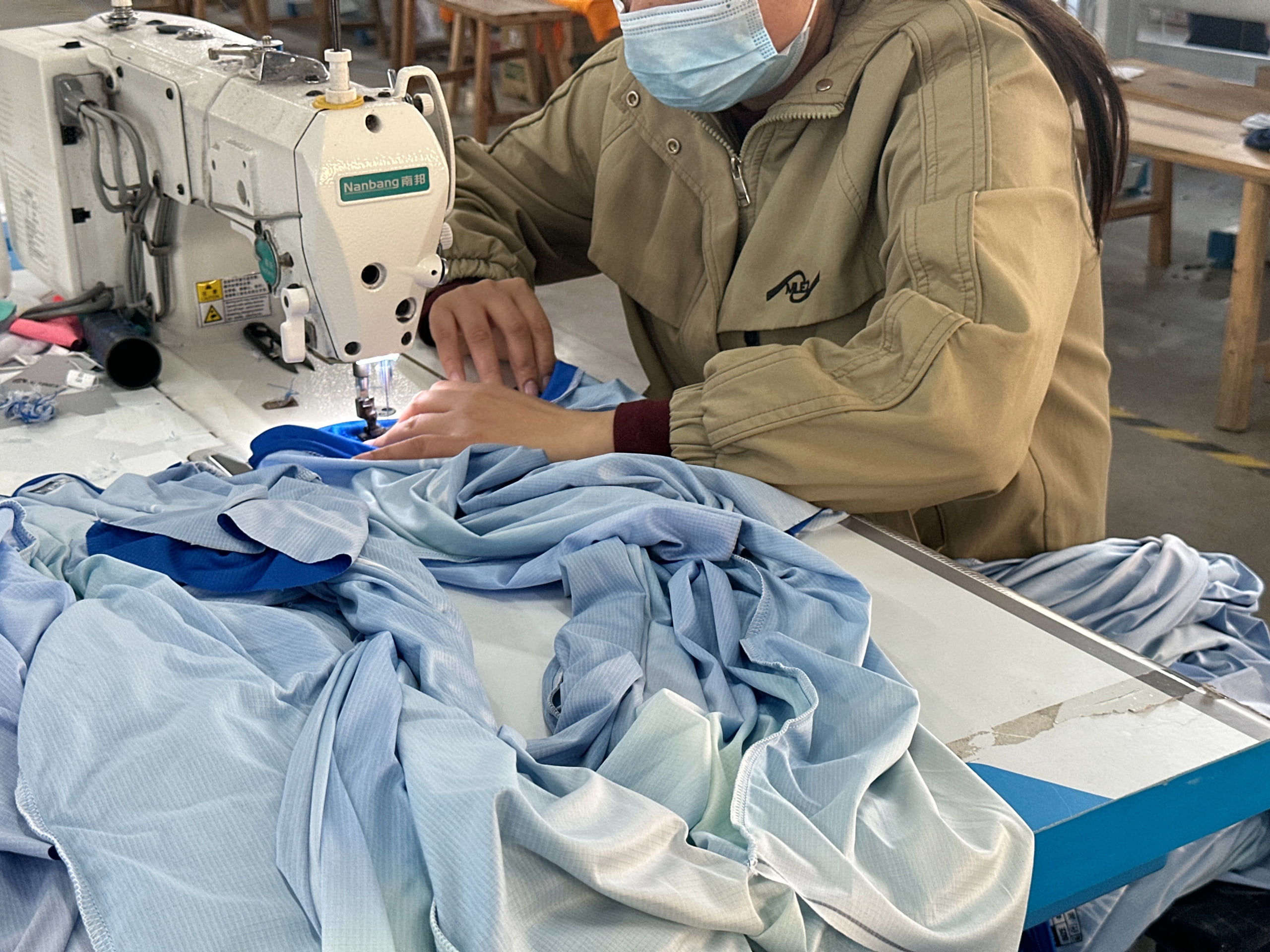
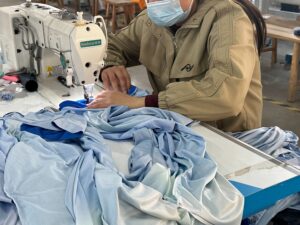
After cutting, the printed panels move into sewing production.
This stage transforms flat printed fabric into a finished jersey.
Workers assemble:
- Sleeves
- Side panels
- Collars
- Shoulder seams
- Shorts components
At the same time, production teams also check:
- Stitching quality
- Thread consistency
- Fabric alignment
- Construction accuracy
Good sewing quality is essential for both comfort and durability during sports activities.
Step 6: Adding Names, Numbers, and Logos
Depending on the production method and customer requirements, additional customization may be added after sewing.
This may include:
- Player names
- Squad numbers
- Heat-transfer sponsor logos
- Sleeve badges
- Competition patches
For academy and club orders, accuracy at this stage is especially important because mistakes in names or numbers can affect entire team sets.
Step 7: Quality Control and Inspection
Before packing, finished jerseys go through quality inspection.
A proper QC process usually checks:
- Print quality
- Color consistency
- Stitching
- Size measurements
- Logo placement
- Player names and numbers
- Loose threads
- Fabric defects
For larger orders, quality control helps reduce the risk of shipment problems and customer complaints.
Professional buyers often pay close attention to QC standards because consistency is critical for long-term cooperation.
Step 8: Packing and Shipment Preparation
After inspection, the jerseys are packed according to customer requirements.
Depending on the project, products may be sorted by:
- Team
- Player
- Size
- Age group
- Product category
Clear organization helps clubs, academies, and distributors handle product distribution more efficiently after delivery.
Once packing is completed, the order is prepared for international shipment.
Why Sublimation Is So Popular in Modern Teamwear
Today, sublimation remains one of the most popular production methods for football kits because it combines:
- Strong visual impact
- Lightweight performance
- Long-lasting durability
- Flexible customization
- Cost efficiency for team orders
It also allows clubs and brands to create unique designs without many of the limitations associated with traditional printing methods.
For this reason, sublimation continues to dominate custom soccer kit production worldwide.
Final Thoughts
Most players only see the finished jersey on the field.
But behind every sublimation football kit is a detailed production process involving design preparation, printing, cutting, sewing, customization, quality control, and shipment coordination.
Understanding this process helps buyers better appreciate what goes into modern teamwear manufacturing — and why production experience and process management matter when choosing a reliable supplier.
At Coolware Kits, we support custom sublimation teamwear production for football clubs, academies, sports brands, and importers worldwide. Our goal is to help customers create professional teamwear with consistent quality and efficient project coordination.