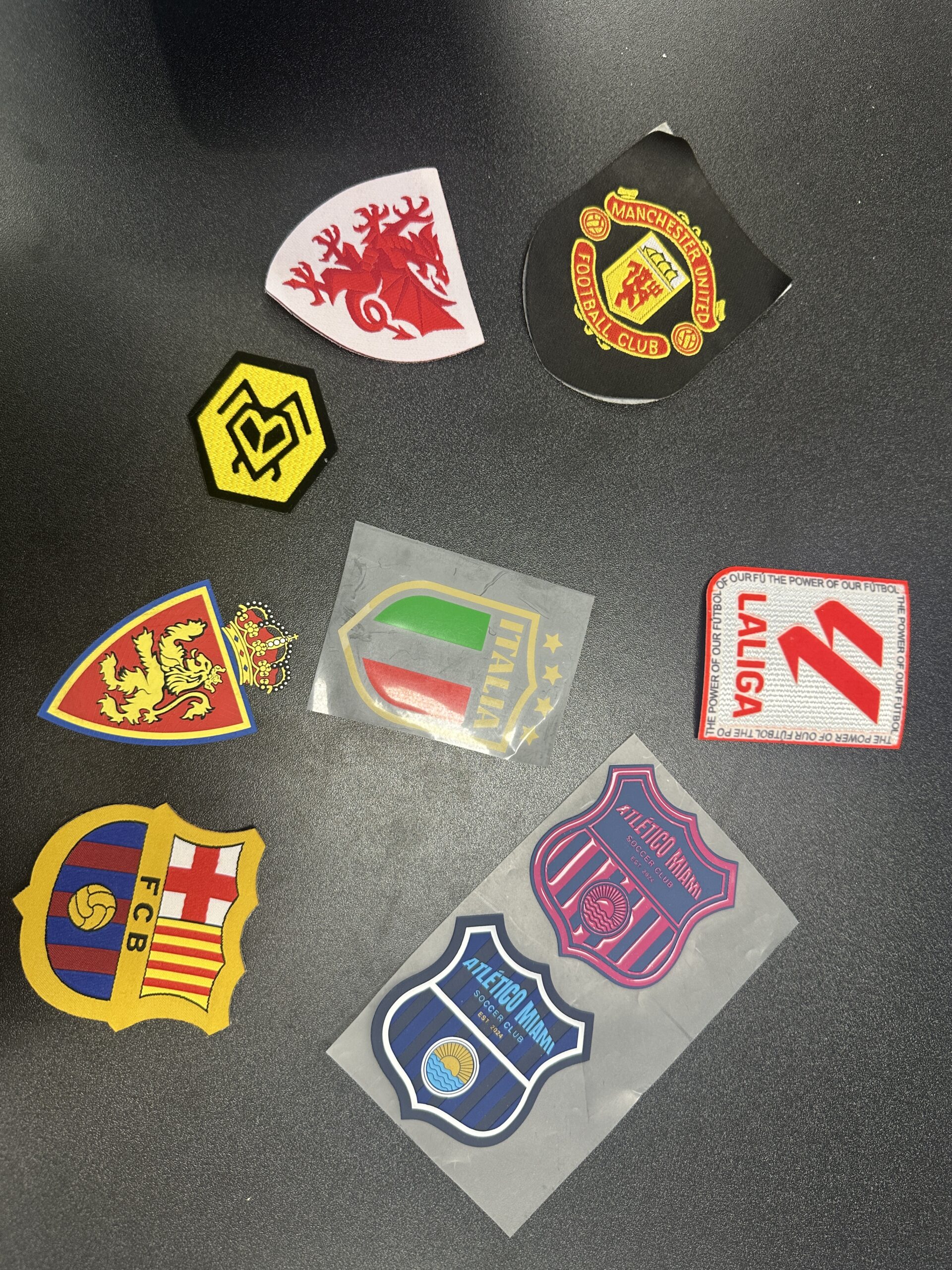
When developing custom football jerseys, fabric and design are important — but logo application methods also play a major role in the final result.
Different logo techniques affect:
- Appearance
- Durability
- Comfort
- Cost
- MOQ requirements
Choosing the right method helps ensure your jerseys match both your budget and brand positioning.
Why Logo Method Matters
A logo is often the most noticeable part of a football jersey.
However, not every logo technique is suitable for every project.
The right choice depends on:
- Product positioning
- Usage frequency
- Budget
- Quantity
- Desired visual effect
Understanding the differences between common logo methods can help you avoid unnecessary costs and production issues.
Heat Transfer / DTF Logos


Heat transfer and DTF (Direct to Film) logos are among the most widely used options in modern sportswear.
Advantages:
- Cost-effective
- Suitable for detailed multi-color designs
- Fast production
- Soft and lightweight feel
- Good for small and medium orders
Best For:
- Amateur clubs
- Training kits
- Promotional jerseys
- Budget-conscious projects
Silicone Logos


Silicone logos create a raised 3D effect and provide a more premium appearance.
Advantages:
- Modern and high-end look
- Strong visual impact
- Good durability
- Premium texture
Things to Consider:
- Higher production cost
- Mold setup required
- Usually higher MOQ
In most cases, silicone logo orders start around:
- 100–300 pieces per design
TPU Logos


TPU logos are lightweight and flexible, making them popular in modern athletic apparel.
Advantages:
- Clean and professional appearance
- Flexible and comfortable
- Durable during washing and use
- Suitable for performance-oriented jerseys
Common Applications:
- Premium teamwear
- Retail-focused jerseys
- Modern sports brands
Like silicone logos, TPU applications often require higher MOQ due to setup requirements.
Embroidery Logos


Embroidery is one of the most traditional logo methods.
Advantages:
- Classic premium appearance
- Strong durability
- High perceived value
Limitations:
- Heavier than transfer logos
- Less breathable
- Not ideal for very lightweight performance jerseys
Embroidery is often used for:
- Polo shirts
- Jackets
- Lifestyle sportswear
- Premium supporter merchandise
Which Logo Method Is Best?
There is no single “best” method for every project.
The right solution depends on your goals.
Choose Heat Transfer / DTF If You Need:
- Lower MOQ
- Faster production
- Cost efficiency
- Lightweight performance jerseys
Choose Silicone or TPU If You Want:
- Premium appearance
- Modern branding effect
- Retail-style sportswear look
Choose Embroidery If You Prefer:
- Traditional premium feel
- Strong visual texture
- Lifestyle or off-field apparel
MOQ and Production Considerations
Premium logo methods such as:
- Silicone
- TPU
- Embroidery
usually require higher MOQ, commonly around:
- 100–300 pieces per design
This is because these techniques involve:
- Additional tooling
- Mold setup
- More complex production processes
However, depending on the project, flexible solutions may still be possible.
Balance Appearance, Performance, and Cost
The best logo method is not simply the most expensive one.
A successful project balances:
- Visual effect
- Wearing comfort
- Durability
- MOQ
- Budget
Choosing the right logo application improves both product quality and long-term value.
Need Help Choosing the Right Logo Method?
At Coolware, we help clubs, brands, and importers select logo applications based on real production conditions and product goals.
We can support you with:
- Different logo samples
- Recommendations based on budget and positioning
- Flexible production solutions
- One-stop support for sportswear and accessories
👉 If you’re planning your next football kit project, feel free to reach out — we’d be happy to help you choose the right solution.