Many people wear sports jerseys every day.
Football players train in them.
Academies order them every season.
Sports brands build entire product lines around them.
But surprisingly, many people have never really thought about what sports jerseys are actually made of.
Behind every finished jersey is a fabric selection process that directly affects:
- Comfort
- Breathability
- Stretch
- Durability
- Weight
- Printing performance
In modern sportswear manufacturing, choosing the right fabric is just as important as choosing the right design.
Sports Jerseys Start With Fabric Rolls
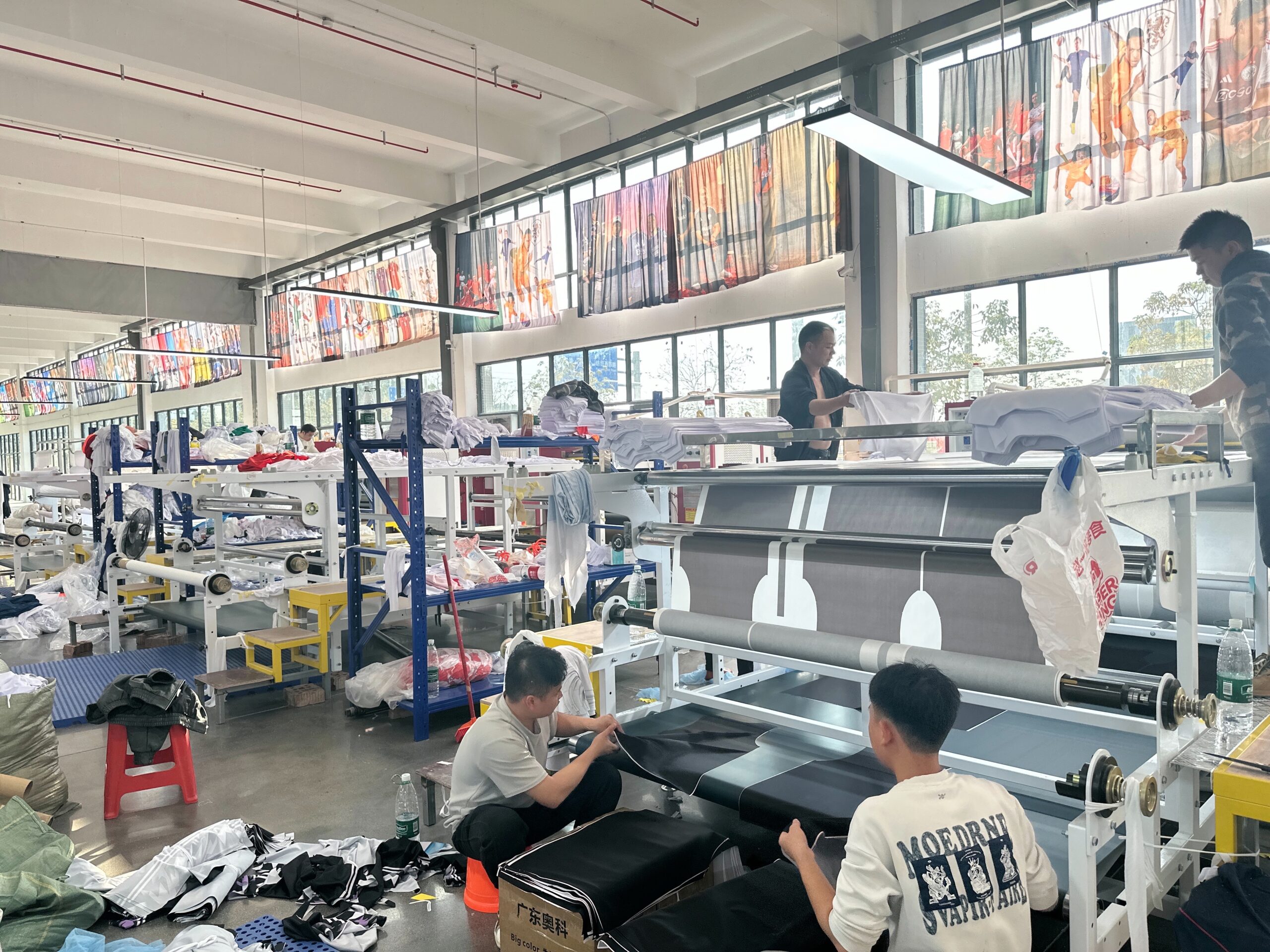
Before a jersey becomes a finished product, it begins as raw fabric stored in large rolls inside the factory.
Depending on production requirements, the fabric is:
- Spread onto cutting tables
- Cut by automated cutting machines
- Or cut manually for certain projects
After cutting, the fabric panels move into printing, sewing, and final production stages.
Different jersey styles require different fabric structures, which is why sportswear factories usually work with many fabric types at the same time.


The Most Common Fabric Used in Sports Jerseys
Today, the majority of sports jerseys are made primarily from polyester.
Polyester has become the industry standard for many reasons:
- Lightweight feel
- Fast drying
- Good moisture management
- Durability during training and matches
- Strong sublimation printing compatibility
This is why most football jerseys worldwide are still made from 100% polyester fabrics.
For teamwear production, polyester also offers stable performance during large-scale manufacturing.
Why Some Sportswear Includes Spandex
Although polyester remains the main material, many modern sportswear fabrics also include spandex (also called elastane).
Spandex adds:
- Stretch
- Flexibility
- Softer movement
- Improved comfort during activity
In sportswear manufacturing, spandex content is commonly around:
- 5%
- 8%
- 12%
- Up to around 18% for highly elastic fabrics
The amount used depends on the intended product performance.
For buyers targeting higher-end markets, polyester-spandex blends are becoming increasingly popular.


Understanding Fabric Weight in Sportswear
Another important factor in jersey production is fabric weight.
Fabric weight is usually measured in:
GSM (grams per square meter)
This helps determine how heavy or light the material feels.
In sportswear production, common fabric weights usually range between:
- 150gsm
- 180gsm
- 220gsm
- 280gsm
Different weights are used for different products and customer preferences.
Lightweight Fabrics (150–180gsm)
Lighter fabrics are often used for:
- Match jerseys
- Training shirts
- Summer sportswear
- Competitive football kits
Advantages include:
- Better breathability
- Lighter wearing experience
- Faster drying
These fabrics are especially common in football teamwear.
Medium to Heavy Fabrics (220–280gsm)
Heavier fabrics are more commonly used for:
- Tracksuits
- Training jackets
- Warm-up wear
- Winter sportswear
These materials provide:
- Better structure
- Increased durability
- More warmth
- Premium hand feel
For many academy and club projects, tracksuits usually use fabrics within this heavier range.
Different Sports Need Different Fabrics
Not all sports use the same fabric requirements.
Different activities place different demands on sportswear performance.
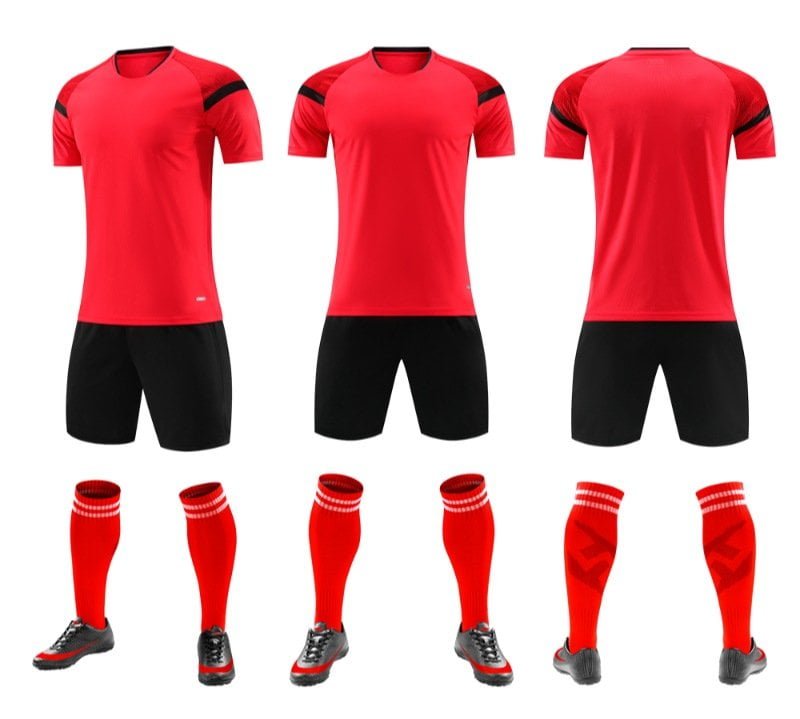
Football Jerseys
Football kits are usually focused on:
- Breathability
- Lightweight feel
- Sweat management
- Durability
This is why 100% polyester remains the most common choice.


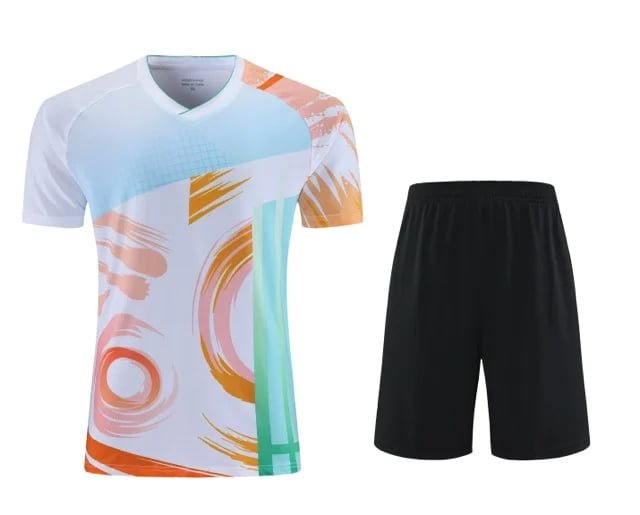
Badminton and Table Tennis Jerseys
Sports involving fast upper-body movement often require more flexibility.
Because of this, badminton and table tennis jerseys frequently include spandex blends.
These fabrics help improve:
- Stretch
- Comfort
- Freedom of movement
especially during rapid directional movement and repeated arm motion.
Why Fabric Selection Depends on Budget
Fabric choice is not only about performance.
Budget also plays a major role.
For example:
- Entry-level teamwear projects may focus on durability and cost control
- Premium clubs and sports brands may prioritize softness, stretch, and advanced performance fabrics
An experienced supplier should help buyers select fabrics based on:
- Budget range
- Sport type
- End-user expectations
- Climate
- Product positioning
This is especially important for importers and distributors managing different customer groups.
Why Fabric Matters for Printing Quality
Fabric also affects how the final jersey looks after printing.
Different fabrics influence:
- Color vibrancy
- Print sharpness
- Sublimation stability
- Surface texture
- Overall appearance
For sublimation sportswear, polyester fabrics generally provide the best printing performance because sublimation ink bonds directly with polyester fibers during heat transfer.
This is one reason sublimation remains so popular in football teamwear production.
Sportswear Fabric Development Continues to Evolve
Modern sportswear fabrics are constantly improving.
Today’s market increasingly focuses on:
- Moisture management
- Breathability
- Stretch performance
- Soft touch
- Durability
- Lightweight construction
As a result, many sports brands and academies are paying closer attention to fabric selection than ever before.
For professional teamwear buyers, fabric choice has become an important part of product positioning and athlete experience.
Choosing the Right Fabric for Your Teamwear Project
There is no single “best” sportswear fabric for every project.
The right choice depends on:
- The sport
- The budget
- The target market
- The performance requirement
- The customer experience you want to create
Understanding these differences helps clubs, brands, and importers make more informed sourcing decisions when developing custom sportswear collections.
At Coolware Kits, we work with a wide range of sportswear fabrics for football kits, training wear, tracksuits, and related teamwear products. For buyers who want to better understand fabric options before production, fabric sample booklets can also help compare different materials, weights, and stretch characteristics more clearly.