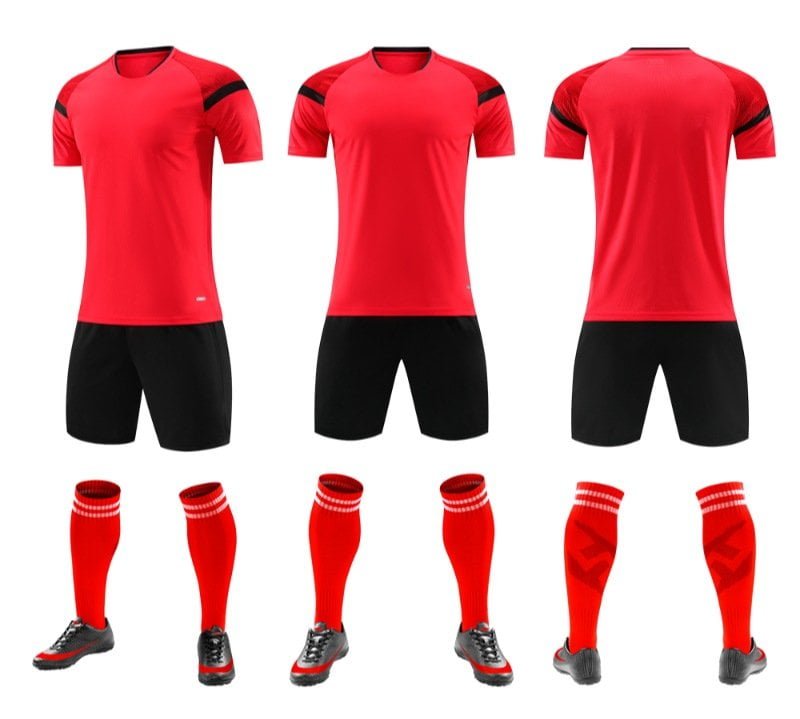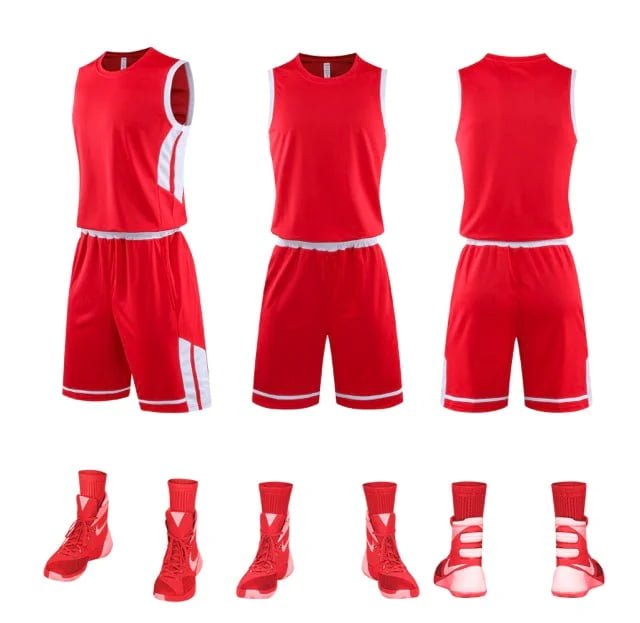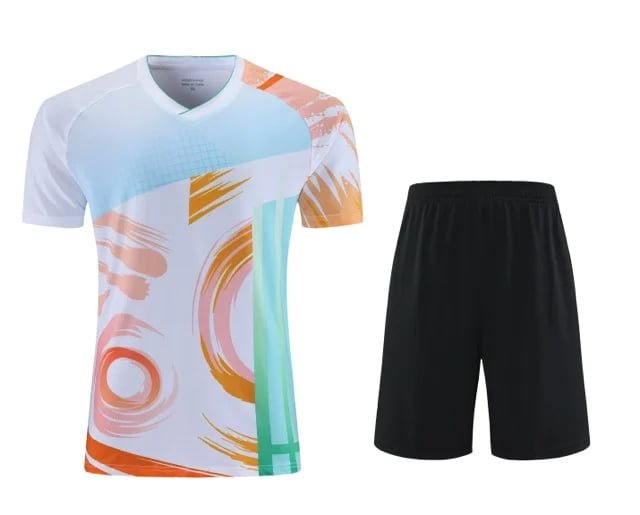
Most people rarely think about loose threads when buying sports jerseys or hockey shorts.
In fact, many customers simply expect the finished product to arrive clean, smooth, and professionally finished.
But behind that polished appearance is an entire finishing process that takes place after sewing is completed.
In sportswear manufacturing, small details matter.
Loose threads may seem minor, but they strongly affect how customers perceive overall product quality.
This is why professional factories invest significant time into trimming, inspection, and finishing before packing.
Sewing Is Only Part of the Production Process
Many people assume a jersey is finished once sewing is completed.
In reality, sewing is only one stage of production.
After garments are assembled, they still go through additional finishing procedures, including:
- Thread trimming
- Surface cleaning
- Inspection
- Shape correction
- Packing preparation
Without these finishing steps, even a well-sewn garment can appear unfinished.
For sports brands, clubs, academies, and importers, product presentation is extremely important because customers often judge quality visually first.
Why Loose Threads Appear During Sewing
Sports jerseys and shorts are usually sewn at high production speed.
Workers handle:
- Sleeves
- Side seams
- Waistbands
- Collars
- Panel connections
- Reinforcement stitching
during continuous production runs.
Because garments move quickly through multiple sewing stages, temporary loose threads naturally appear during assembly.
This is completely normal in apparel manufacturing.
The key difference between average factories and professional factories is not whether threads appear temporarily — it is whether the factory removes them properly before shipment.
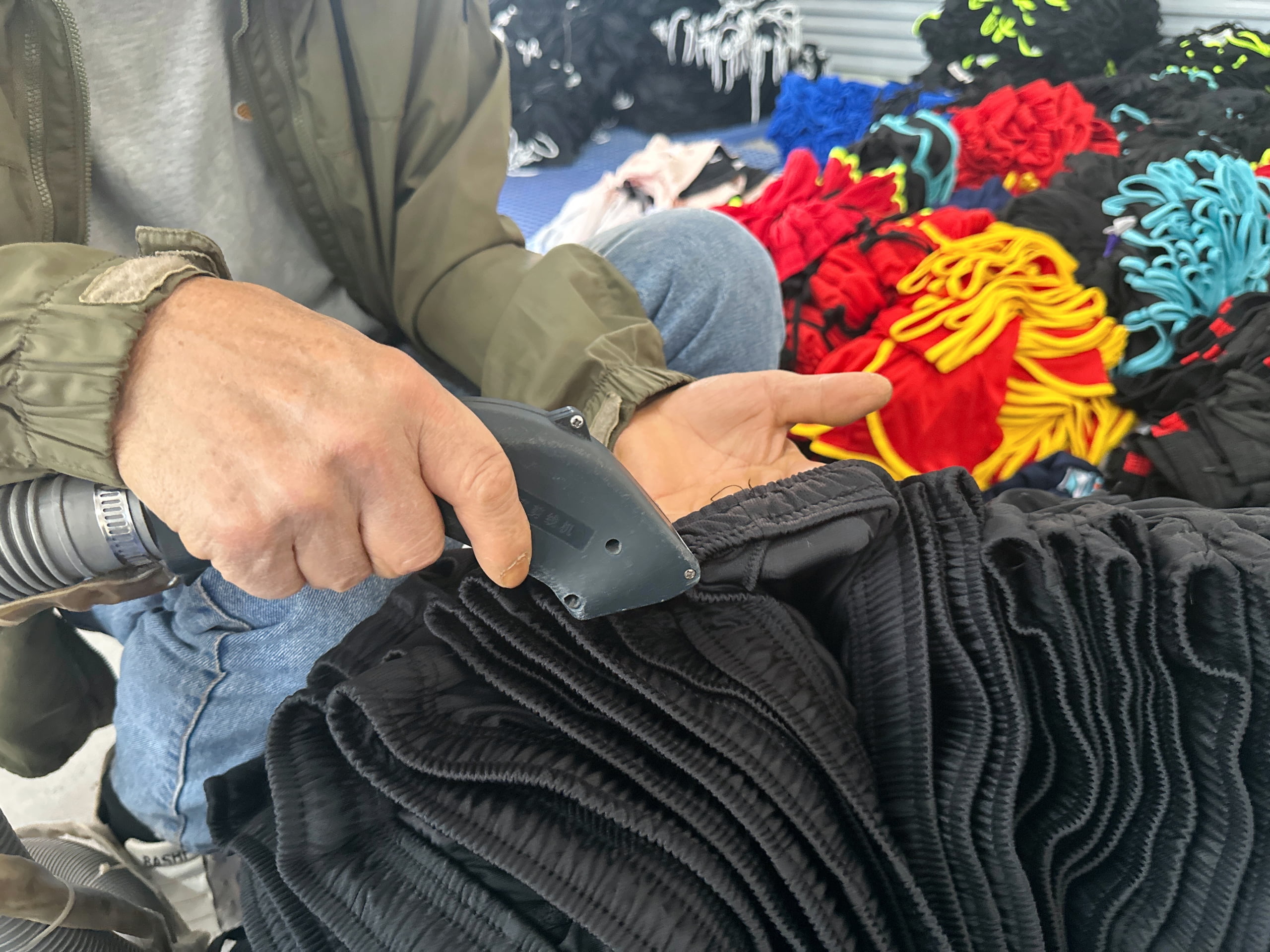
The Role of Thread Trimming in Sportswear Production
Thread trimming is an important finishing stage in garment manufacturing.
Its purpose is to remove:
- Excess sewing threads
- Surface fiber leftovers
- Small unfinished details
This helps create a cleaner and more professional final appearance.
For performance sportswear, thread trimming is especially important because athletes and teams often expect products to look highly polished and retail-ready.
In many factories, workers responsible for this process jokingly become known as the “fabric barbers.”
How Professional Trimming Machines Help
Modern sportswear factories often use professional trimming machines to improve finishing efficiency.
These tools help workers:
- Remove excess threads quickly
- Clean fabric surfaces
- Improve garment appearance
- Maintain consistency across large orders
This process is especially useful for products like:
- Hockey shorts
- Tracksuits
- Training apparel
- Heavier sportswear fabrics
where stitching structures may create more visible thread remnants after sewing.
Why Manual Inspection Still Matters
Even with trimming equipment, manual inspection remains essential.
Experienced workers still carefully check garments using scissors and visual inspection to ensure:
- Loose threads are removed
- Stitching looks clean
- Logos remain undamaged
- Garment appearance stays consistent
Human attention to detail is still difficult to fully replace with automation alone.
This is one reason why experienced finishing workers remain very valuable in sportswear manufacturing.
Small Details Affect Customer Perception
Many importers and sports brands understand that small finishing details can strongly influence customer satisfaction.
Even if the fabric and printing quality are excellent, unfinished loose threads may still create a lower-quality impression.
Clean finishing helps improve:
- Retail presentation
- Brand image
- Customer confidence
- Product consistency
For large academy and club orders, these details become even more important because the products represent the organization publicly.
Why Finishing Quality Reflects Factory Standards
Thread trimming itself may seem like a small process, but it often reflects the overall production mindset of the supplier.
Factories that pay attention to finishing details are usually also more careful about:
- Quality control
- Logo positioning
- Size consistency
- Packaging
- Production management
In sportswear manufacturing, quality is rarely the result of one single step.
It is usually the result of many small processes handled consistently and carefully throughout production.
Quality Is Built Through Process
Professional-looking jerseys do not happen by accident.
Behind every clean and polished garment are systems involving:
- Sewing control
- Finishing procedures
- Inspection standards
- Experienced workers
- Production discipline
For clubs, sports brands, and importers, these details help create products that feel more reliable and professional to end users.
This is especially important for organizations building long-term reputation in competitive sports markets.
Behind the Finished Jersey
Most players only see the final jersey after delivery.
But behind every finished football kit, hockey short, or training garment is a production process involving:
- Fabric preparation
- Printing
- Cutting
- Sewing
- Thread trimming
- Quality inspection
- Packing
Loose threads may temporarily appear during manufacturing, but professional finishing processes help ensure that the final product delivered to the customer remains clean, consistent, and ready for use.
In modern sportswear production, quality is not created by luck — it is built through process, experience, and attention to detail at every stage.